Publications
Discover our comprehensive collection of scholarly publications.
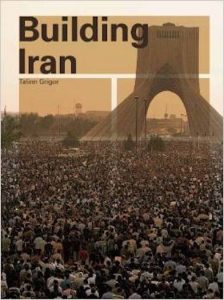
Building Iran: Modernism, Architecture & National Heritage
This is a guide to a juncture in Iranian history when foundational issues of national purpose and cultural heritage – secular reform and religious tradition – were being reframed. Architecture of the Pahlavi reign, 1925-79, is the principal subject of discussion, along with the Society for National Heritage, which commissioned numerous buildings and monuments, initiated […]
Read More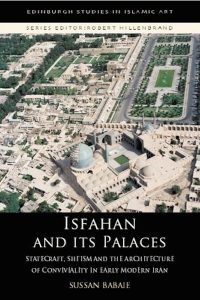
Isfahan & its Palaces: Statecraft, Shi’ism and the Architecture of Conviviality in Early Modern Iran
Winner of the Houshang Pourshariati Iranian Studies Book Award 2009, this beautifully illustrated history of Safavid Isfahan (1501-1722) explores the architectural and urban forms and networks of socio-cultural action that reflected a distinctly early-modern and Perso-Shi’i practice of kingship. An immense building campaign, initiated in 1590-91 at the millennial threshold of the Islamic calendar (1000 […]
Read More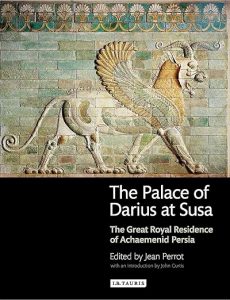
The Palace of Darius at Susa: The Great Royal Residence of Achaemenid Persia
The palace complex of the Persian King Darius I, the Great (522-486 BCE), provides unique evidence of the sophistication of Achaemenid architecture and construction. This palace, built 2500 years ago in western Iran, lay at the centre of the Persian Empire that stretched from the Nile and the Aegean to the Indus Valley. First rediscovered […]
Read More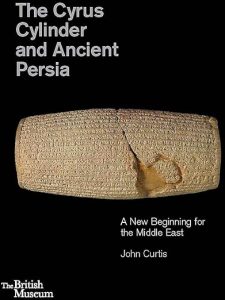
The Cyrus Cylinder and Ancient Persia: A New Beginning for the Middle East
The Cyrus Cylinder is one of the most famous objects to have survived from the ancient world. The Cylinder was inscribed in Babylonian cuneiform on the orders of the Persian King Cyrus the Great (559−530BC) after he captured Babylon in 539 BC. It is often referred to as the first bill of human rights as […]
Read More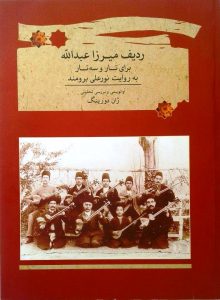
The Radif of Mirza Abdollah: Interpreted by Nur’ali Borumand. A Canonic Repertoire of Persian Music
Jean Durings’ Note: “I thought that this monument of Persian musical tradition deserved a better edition and that I should reconsider my first transcription with the help of the new available computer musical softwares. I found it desirable and possible to enhance the computer notation in order to make them clearer and better looking by highlighting […]
Read More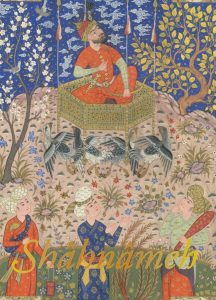
Shâhnâmeh: Le Livre des Rois
The first complete translation in verse of the Persian poetry masterpiece in French, the book is illuminated with fifty miniatures from a 16th-century Safavid manuscript, as well as original drawings by Scott Pennor. It includes an index of proper names.
Read More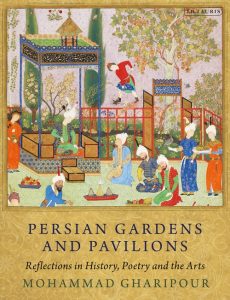
Persian Gardens and Pavilions
From Timur’s tent in Samarqand to Shah ‘Abbas’s palace in Isfahan and Humayun’s tomb in Delhi, the pavilion has been an integral part of Persianate gardens since its earliest appearance at the Achaemenid garden in Pasargadae in the sixth century BC. Here, Mohammad Gharipour places both the garden and the pavilion within their historical, literary […]
Read More
Die azurblauen Zeilen
Die azurblauen Zeilen; Eine Sammlung von Gedichten des Sohrab Sepehri mit autobiografischen Beitrag includes a collection of Sepehri’s most distinguished poems, as well as a translation of his autobiography, and a detailed introduction to his life and the status of his poetry in the modern Persian literature.
Read More
The Persian Alexander: The First Complete English Translation of the Iskandarnama
Alexander the Great (356-333 BC) was to capture the imagination of his contemporaries and future generations. His image abounds in various cultures and literatures – Eastern and Western – and spread around the globe through oral and literary media at an astonishing rate during late antiquity and the early Islamic period. The first Iskandarnama, or […]
Read More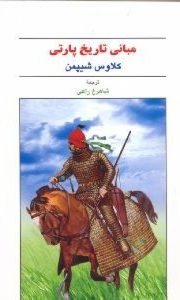
Mabānī-ye Tārīkh-e Pārtī (Fundamentals of Parthian History)
This book is a Persian translation of a seminal work, Grundzüge der Parthischen Geschichte, written by Professor Klaus Schippmann (1924-2010), the former professor of the Institute of Iranian Studies in Göttingen. Schippmann attempts to aptly depict the basics of Parthian history, despite the limitation and lack of historical sources for this period. Grundzüge der Parthischen […]
Read More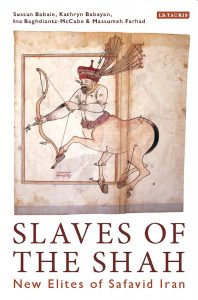
Slaves of the Shah: New Elites of Safavid Iran
The Safavid dynasty represented, in political, cultural and economic terms the pinnacle of Iran’s power and influence in its early modern history. The evidence for this -the creation of a nation state, military expansion and success, economic dynamism and the exquisite art and architecture of the period – is well-known. What is less understood is […]
Read More
Sa’di in Love: The Lyrical Verses of Persia’s Master Poet
Following three former books on Sa’di, one in English and two in Persian, Dr. Homa Katouzian’s latest book is made up of 85 ghazals, translated into English published side by side with the Persian originals. It includes a lengthy introduction on Sa’di and his love poetry, including a discussion of the contribution of others, both […]
Read More