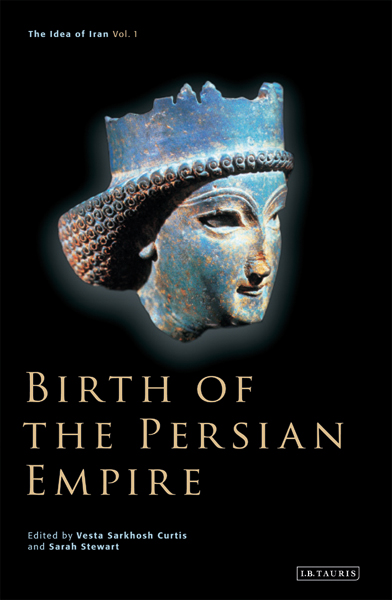
Of the great ancient civilisations, that of Persia is the least known and the most enigmatic, this book explores the formation of the Persian empire under the Achaemenid Persians. It gives a multidisciplinary view of ancient Iran in the first millennium B.C.E. and covers the art, archaeology, history and religion of a vast geographical area far beyond the present borders of modern Iran. The book also discusses various aspects of the origins of the Persian empires, its formation in the middle of the sixth century B.C.E. by Cyrus the Great, up to its collapse following the conquest by Alexander the Great in the late fourth century B.C.E.
Authors / Editors
Sarah Stewart
Dr Sarah Stewart is Lecturer in Zoroastrianism in the Department of the Study of R...
Sarah Stewart
Dr Sarah Stewart is Lecturer in Zoroastrianism in the Department of the Study of Religions at the School of Oriental and African Studies, University of London and Deputy Director of the London Middle East Institute, also at SOAS. She has been co-convenor of the ‘Idea of Iran’ symposia since its inception in 2006 and has co-edited five volumes in the ‘Idea of Iran’ publication series with I.B.Tauris. She serves on the Academic Council of the Iran Heritage Foundation and has been a longstanding Fellow of the British Institute of Persian Studies, most recently serving as its Honorary Secretary until 2013, in which year Dr Stewart co-organised the acclaimed exhibition: ‘The Everlasting Flame: Zoroastrianism in History and Imagination’. Her publications include studies on Parsi and Iranian-Zoroastrian living traditions and is currently working on a publication (in collaboration with Mandana Moavenat) on contemporary Zoroastrianism in Iran.
Vesta Sarkhosh Curtis
Dr Vesta Sarkhosh Curtis is Curator of Middle Eastern Coins at the British Museum ...
Vesta Sarkhosh Curtis
Dr Vesta Sarkhosh Curtis is Curator of Middle Eastern Coins at the British Museum and is responsible for its collection of pre-Islamic Iranian coins (from the third-century BC until the middle of the seventh-century AD), which includes both Parthian and Sasanian coins. She also looks after coins of the Islamic world beginning with the Umayyad and Abbasid periods and including coins of the Samanid and Buyid, Seljuk, Mamluk, Ayyubid and Fatimid, Ilkhanid and Timurid, Safavid and Qajar dynasties. Projected have included The Sasanian Coin Project, a collaborative project with the National Museum of Iran in Tehran, and now successfully completed. The result is a two-volume Sylloge of Sasanian coins of the third- to seventh-centuries AD while Dr Sarkhosh Curtis currently jointly-directs the International Parthian Coin Project, The Sylloge Nummorum Parthicorum (SNP), and is Joint Editor of the SNP series. This multi-institutional project will record Parthian coins of the third-century BC to the third-century AD found in London, Vienna, Tehran, Paris, Berlin, and the American Numismatic Society, New York.
Table of Contents
Chapter 1The Achaemenid Empire: Foundations of Iranian Kingship